Bryan's Blog

Update Your Beneficiaries

September 12, 2011 by admin

When was the last time you checked/updated the beneficiary information on your retirement accounts, pension plans, and life insurance policies?

If it’s been a while, now may be a good time to go through some of your records and double-check to make sure that the beneficiaries listed on your accounts are the ones you want.

In case you were wondering: Pension companies, retirement accounts, and life insurance companies have no idea when people pass away.

This is why it’s a good idea for us to always make sure that our list is current.

Along with updating our beneficiaries, we should also make sure that our beneficiaries know they are listed on our accounts, and that all information is easily accessible to them should something happen to us prematurely.

Situations that occur when beneficiaries should be updated:

  • Marriage
  • Divorce
  • Children’s birth – don’t list minor child as beneficiary
  • Children reaching 18 years of age
  • Death of a previous listed beneficiary
  • Establishment of a Living Trust/Will

I have heard several stories of retirement-account owners who have been divorced and remarried but have neglected to update their beneficiary designations accordingly. As you can imagine, this can be quite frustrating for their survivors, who must battle in court for a legal determination of the true beneficiary. The court’s decision, however, may not necessarily be what the deceased would have wanted.

Documents/Records to review/update beneficiaries:

  • 401(k), 403(b), IRA, Roth IRA
  • Life Insurance Policies
  • Living Trust/Will Documents
  • Pension Plans

*The articles on this blog are for education and entertainment purposes only and should not be taken as financial or legal advice.  See legal disclaimer for further information.  If you would like more information about how something listed in any of my posts specifically affects you, please feel free to comment below, email me, or call me anytime.

Filed Under: Finances, Life Insurance  

Don’t Get Your Financial Advice from the “Gurus” on TV!

February 14, 2011 by admin

I don’t know about you, but when I was a kid, one of the things my parents used to say to me was, “just because it’s on TV doesn’t mean it’s true.”

That advice is more true today than back when I was a kid.  When I was a kid, my parents were commenting on the cartoons I was watching.  Today, this advice could be applied to all the financial, stock, and investments “gurus.”

I’m not saying that everything they say isn’t true.  And I’m not saying that none of the advice they provide is valuable.  What I am saying is that we need to evaluate the advice they provide and determine if it applies to us specifically.

We should never assume that just because someone has a TV show, sells a lot of books, and has a strong opinion about something that they are right.

We need to remember that the advice they are giving is being sent out to millions of people.  They are not providing specific advice designed to meet your particular needs.

They are on TV to entertain!

How do you entertain an audience?

  • Use Bold Headlines
  • Have Sensational Stories
  • Provide Extreme Examples
  • Have a Strong, Outgoing Personality to Deliver the Content.

In my opinion these “financial gurus” are not on TV to give financial advice.  They are on TV to entertain and they use finances as their means to entertain.

How poor is the advice from the media?

In 2000, Case Western Reserve University conducted a study showing that investors who follow media recommendations lose 3.8% of their money in the following six months after the recommendation.

Instead of taking the financial gurus’ advice, I believe we should consider their advice.  Consider what they have to say, and then make our decisions based on our specific situation.

And if you do ever need tax or financial advice focused on your specific situation, feel free to contact me anytime.

*Please keep in mind that all the information I post on this site is for general purposes only.  I understand that every person’s situation is unique and should be treated as such.  If you would like more information about how something listed in any of my posts specifically affects you, please feel free to comment below, email me, or call me anytime.

Filed Under: Finances  

When is the Best Time to Buy a Home?

February 7, 2011 by admin

Is this a good time to buy a home?

Should you wait to buy a home or continue renting for a while?

Should you wait to see if the government is going to have another homebuyer tax credit?

As a Tax & Financial Advisor, I hear questions similar to these quite frequently.

Buying a home is a big decision that should never be made lightly or hastily.

And unfortunately, the answer to all these questions is, “It depends.”

Everyone’s situation is unique and everyone has a different story.  I think it’s wise to consider your specific situation before listening to anyone who says outright that “now is the time to buy” or “now is the time to sell.”

One of the major reasons I began working with Homeownership University recently is because I believe they do a great job of educating people when it comes to making their home ownership decisions.

My #1 Rule When it Comes to Buying a Home:
Only Buy if it Makes Financial Sense TODAY!

Sure we all want our house to be worth more when we sell it than when we buy it – I know I do!!  And sure no one wants to pay more in interest than they have to.  But we don’t know what’s going to happen next week, next month, or even next year.  Our decision to buy a home should be based on whether or not the numbers make sense TODAY!

If you are thinking more about the future and what you “hope” will happen, then you shouldn’t buy a home today.

One of the many reasons the housing market crashed was because home buyers were hoping on the future. 

  • People were buying homes hoping they would appreciate so they could refinance or move up to a better home.
  • People were buying homes and hoping they would make more money in the near future to afford the house payment.
  • People were buying Negative Amortization loans, and hoping that they could refinance in a couple years into a better loan.

My advice is to only buy a home if it makes financial sense TODAY!  If the numbers all make sense today, and you can afford the house payment today, then buying a home might be a good idea for you.

Factors to Consider Before Buying a Home

  • How long are you planning on living in your home?
  • Find out what you’re pre-qualified to buy BEFORE searching for homes.
  • Talk to a Qualified/Friendly Real Estate Agent who will assist you and not push you.
  • Consider how owning a home will affect your income taxes.
  • Make sure you can afford all the additional costs that come with owning a home – there are many!!

We can never know exactly what is going to happen in the future for the housing market.  The ‘experts’ are proven wrong almost every day.

The only thing we can do is see if the numbers make sense today.  If all the numbers make sense today for you and your situation, then the future shouldn’t matter as much.

If you need any assistance learning about how buying a home may affect your income tax and financial situation, please feel free to contact me anytime.

*Please keep in mind that all the information I post on this site is for general purposes only.  I understand that every person’s situation is unique and should be treated as such.  If you would like more information about how something listed in any of my posts specifically affects you, please feel free to comment below, email me, or call me anytime.


Filed Under: Finances, Home Ownership  

Simplify: The Best Financial Decision You Can Make in 2011!

January 3, 2011 by admin

Do you sometimes feel that our lives have gotten far too complicated?  I know I feel this way sometimes, and I’ve seen many people feel this way too.


From my experience, I believe one of the main causes of the stress and frustration in our lives comes from our finances.

For many people just thinking about finances, budgeting, taxes, retirement, and everything in between causes stress and frustration.

The great thing is that it doesn’t have to be this way.  There is a solution.

The solution is to simplify!

Let’s simplify!

Let’s simplify our finances this year!  Let’s simplify our lives!

Unfortunately, we’ve complicated our lives to the point that many of us don’t even know where to start.  Do we start with:

  • Tracking our budget?
  • Reducing our debt?
  • Monitoring our spending?
  • Maximizing our investments?
  • Contributing more to our retirement?
  • Contributing to our kids’ college savings plans?
  • Finally getting that life insurance policy?
  • Reducing our taxes?
  • The list goes on and on…..

If this sounds like something you may be guilty of, don’t feel bad, you are definitely not alone.  The good news is that it’s not that hard to get the control back.

It all starts with simplifying!

We are often told by the experts that if we just organize our finances better we will gain greater control. 

This is a huge mistake!

We first need to simplify our finances before we should start to organize.  It looks great to have spreadsheets and budgeting software that’s nicely organized, but if it contains too much information and is not simple, than it will be hard to control.

By simplifying first, our finances will be easier to organize, understand, and control.  If you’re looking for a good place to start you may want to read about my 23 quick ways to simplify your finances.

Other things/areas to consider when simplifying your finances:

  • How many checking/savings accounts do you have?
  • How many credit cards do you have/use?
  • How many investment vehicles do you have?
  • What investments are you in?  Do you even know how many you have?
  • How much life insurance do you have?  Do you know where it is?
  • How many boxes of files do you have?

Let’s all start to simplify our lives this year.

If you feel you could use some assistance in simplifying your finances, taxes, 403(b), or other investments, feel free to comment below, email me, or call me anytime.

*Please keep in mind that all the information I post on this site is for general purposes only.  I understand that every person’s situation is unique and should be treated as such.  If you would like more information about how something listed in any of my posts specifically affects you, please feel free to comment below, email me, or call me anytime.

Filed Under: Finances  

23 Quick Ways You Can Simplify Your Finances

September 23, 2010 by admin

Here are some suggestions to simplify your finances and hopefully make life a little less stressful for you.

1.  Get Organized at home/work/school.  Stop letting things pile up, and get rid of the clutter.  Clutter can make us procrastinate and not stay on top of our finances.

2.  Have a place for everything.  For example, designate one place/folder to collect all tax-related information throughout the year.

3.  Have one “inbox.”  Have just one place in your house where all your mail goes.  Then make sure you empty it at least two to three times a week – everyday would be best.

4.  Automate.  Sign up for automatic monthly billing for your regular bills.

5.  Automate some more.  Enable automatic transfers to savings and retirement accounts once a month.

6.  Simplify your wallet.  Have only one debit and one credit card in your wallet.

7.  Get a receipt organizer.  Only keep the ones you’re likely to need for taxes or returns.

8.  Stop eating out so much!

9.  Go grocery shopping only once a week.  Make a list, and don’t buy anything that’s not on the list – this is a tough one for us.

10.  Consolidsate insurance policies.  Consider a single insurance company to consolidate billing and get discounts.

11.  Slow down. Don’t buy impulsively.  If you really need it today, you’ll really need it in 30 days.  Give yourself time to think about your purchases.

12.  Bundle expenses.  If it makes sense financially, bundle certain services like cable, internet, and phone – we saved about $20/month doing this a year ago.

13.  Consolidate due dates of bills to the same day of the month.

14.  Consolidate debt or loans into as few accounts as possible.

15.  Develop a plan to pay down your credit cards – feel free to contact me if you need help with this.

16.  Use a software program to track your money.

17.  Reduce/Limit your number of budget categories.  Cut the number of budget categories you track to less than 15.

18.  Keep only the files you need.

19.  Stop checking the market everyday.  If you’re a long term investor, stop checking the market and your investment balances daily.  However, be aware of what you’re invested in and don’t be afraid to ask questions if you don’t know the answers.

20.  Check the market occasionally.  I know this seems opposite of what I just wrote, but some people never check the market.

21.  Set a date.  Once a week get with yourself/spouse to track/check your spending.  Brandy and I are really working on this one.  When we do get together, it’s usually for only 10-15 minutes, but it really keeps us focused and aware of our spending.

22.  Find and eliminate unnecessary expenses.

23.  Subscribe to my email list and get some really cool advice!

Contact me.  We can review your situation and see if there is any way I might be able help to simplify your finances.  I’m honored to say that many of my clients come to me for help with their budgeting.

Filed Under: Finances, Money  

9 Most Common Wealth Accumulation Mistakes

August 11, 2010 by admin

Today with all the problems we are facing, like the stock market’s volatility, house values crashing, and debt running out of control, we need to take action with our money and really plan ahead for our future.  If we don’t, no one else will! So with that being said here is a list of 9 items that are common mistakes many of us make – including me from time-to-time.

1. Procrastination. This is the biggest money mistake any of us can make is putting off until tomorrow what we should have done yesterday. This is probably the biggest financial mistake any of us can make.

2. Failure to Establish Definite Financial Objectives and Implement a Plan for Reaching Those Objectives.   None of us plan to fail – we simply fail to plan.  We fail to set specific objectives and implement a workable plan for realizing those objectives. Ask yourself, do you have a well thought out financial plan? Would you like to?

3. Time Value of Money. Most people do not understand the tremendous potential of compounding money over a period of time.  Albert Einstein did however, for he is known as once saying, “The most powerful force in the universe is compound interest.”

4. Failure to Recognize the Impact of Inflation. Inflation reduces the purchasing power of dollars over time. The purchasing power of $100,000, 10 years down the road is only $67,556 at an inflation rate of just 4 percent.

5. Lack of a Clear Understanding of Tax Laws. Failure to Implement Strategies to Legally Avoid Taxes. Income, estate, and gift taxes can be substantially reduced or eliminated altogether through effective tax planning. Understanding implications of tax laws can result in fewer dollars making the one-way trip to Washington. What are you doing to plan for future (inevitable) tax hikes?

6. Inadequate Protection Against Unforeseen Losses. Life, home, health, auto, disability, liability and other forms of insurance are the foundation of a sound financial plan. What are you doing to protect against unforeseen and catastrophic losses that befall us all?

7. Letting Family Spending Run Wild. Lack of discipline in spending habits can cause even the best-laid plans to fail. Do you need help setting up your spending plan?

8. Unrealistic Expectations. It takes time to build wealth. Too many people expect dramatic results too fast and become disenchanted when get-rich-quick schemes do not materialize.

9. Failure to Use Professional Advisors. None of us can expect to live long enough to become expert at everything – especially the intricacies of efficient financial planning.  We need to surround ourselves with professionals who are specialists in their areas and rely on a qualified financial advisor to coordinate the efforts of your entire financial team. Are you going it alone?

Feel free to contact me anytime if you ever have any questions.

Filed Under: Finances, Money  

Financial Records to Keep

August 11, 2010 by admin

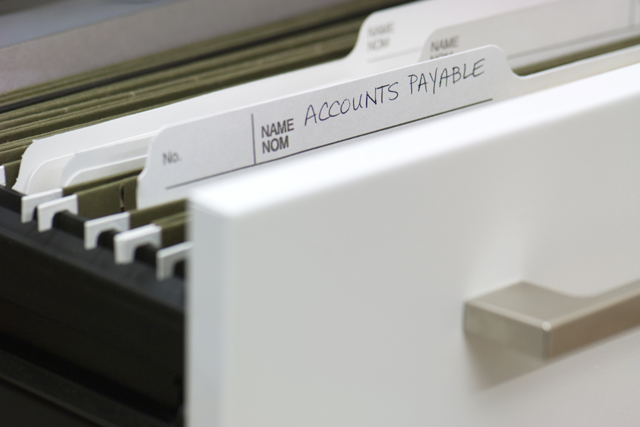
Every once in a while clients ask me about how long they should keep certain financial records.  So I decided to make a list for anyone else interested.  This information can also be found at www.bankrate.com.  Below is listed the type of record, the length of time to keep, and why.

Taxes – Seven Years.
The IRS has three years from your filing date to audit your return if it suspects good-faith errors. The three-year deadline also applies if you discover a mistake in your return and decide to file an amended return to claim a refund.  The IRS has six years to challenge your return if it thinks you underreported your gross income by 25 percent or more.  There is no time limit if you failed to file your return or filed a fraudulent return.

IRA contribution records – Permanently.
If you made a nondeductible contribution to an IRA, keep the records indefinitely to prove that you already paid tax on this money when the time comes to withdraw.

Retirement/savings plan statements  – From one year to permanently.
Keep the quarterly statements from your 401(k) or other plans until you receive the annual summary; if everything matches up, then shred the quarterlies.  Keep the annual summaries until you retire or close the account.

Bank Records – From one year to permanently.
Go through your checks each year and keep those related to your taxes, business expenses, home improvements and mortgage payments.  Shred those that have no long-term importance.

Brokerage statements – Until you sell the securities.
You need the purchase or sales slips from your brokerage or mutual fund to prove whether you have capital gains or losses at tax time.

Bills – From one year to permanently.
Go through your bills once a year.  In most cases, when the canceled check from a paid bill has been returned, you can shred the bill.  However, bills for big purchases — such as jewelry, rugs, appliances, antiques, cars, collectibles, furniture, computers, etc. — should be kept in an insurance file for proof of their value in the event of loss or damage.

Credit card receipts and statements – From 45 days to seven years.
Keep your original receipts until you get your monthly statement; shred the receipts if the two match up. Keep the statements for seven years if tax-related expenses are documented.

Paycheck stubs – One year.
When you receive your annual W-2 form from your employer, make sure the information on your stubs matches.  If it does, shred the stubs.  If it doesn’t, demand a corrected form, known as a W-2c.

House/condominium records – From six years to permanently.
Keep all records documenting the purchase price and the cost of all permanent improvements — such as remodeling, additions and installations.  Keep records of expenses incurred in selling and buying the property, such as legal fees and your real estate agent’s commission, for six years after you sell your home.  Holding on to these records is important because any improvements you make on your house, as well as expenses in selling it, are added to the original purchase price or cost basis. This adds up to a greater profit (also known as capital gains) when you sell your house. Therefore, you lower your capital gains tax.

Filed Under: Finances  

Copyright © 2026 · Dynamik Website Builder on Genesis Framework · WordPress · Log in